

All France News


Lauren Harper is Freedom of the Press Foundation’s first Daniel Ellsberg Chair on Government Secrecy.
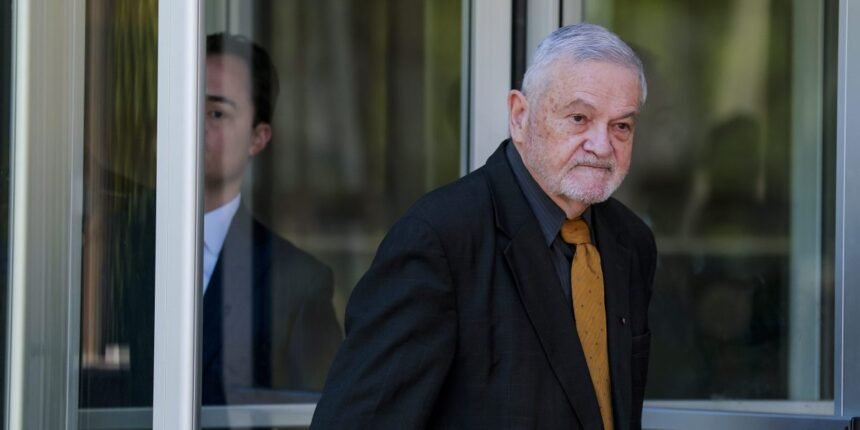
Armed federal agents recently arrested Dr. David Morens, a 78-year-old retired government scientist, strip-searched him, and charged him with crimes that could carry decades in prison — all for allegedly using his personal email to try and evade Freedom of Information Act requests.
According to prosecutors, Morens, a former senior adviser at the National Institute of Allergy and Infectious Diseases, used personal email accounts to dodge FOIA, deleted records, and sought to circumvent federal records requirements. In one message about communications about Covid research, he allegedly wrote: “I learned from our FOIA lady here how to make emails disappear after I’m FOIA’d but before the search starts. … Plus I deleted most of those earlier emails after sending them to my Gmail.”
If true, his actions were egregious and wrong, and accountability should be both proportional and consistent with previous cases of records destruction and FOIA evasion.
But the Justice Department has, for decades, largely taken a hands-off approach to enforcing FOIA. When it has enforced the law, it’s usually landed in civil rather than criminal court. The DOJ has almost never treated FOIA evasion behavior as a crime — at least until now.
That’s the real danger: making it so FOIA evasion is only a crime if the administration has a score to settle.
Even in high-profile cases involving far more sensitive material, such as Hillary Clinton’s infamous use of a private email server or Bill Clinton’s national security adviser Sandy Berger’s repeated removal of classified documents from the National Archives, penalties were limited. Berger, for example, received probation, a fine, and community service, and Hillary Clinton wasn’t charged.
Morens, by contrast, faces real prison time if convicted: up to five years for conspiracy, up to 20 years per count for destruction of records, and additional penalties for concealment.
It should be irrelevant that Morens allegedly tried to evade FOIAs from a mix of organizations, including the Heritage Foundation, Judicial Watch, and U.S. Right to Know. But it raises a question the Justice Department has not answered: Would similar charges be brought if the requesters were environmental groups, press freedom organizations, or others less politically aligned with the current administration?
The answer is likely no, and that’s the real danger: making it so FOIA evasion is only a crime if the administration has a score to settle.
This prosecution also comes at a moment when the federal government’s commitment to FOIA has never been lower. Secretary of Health and Human Services Robert F. Kennedy Jr. has hollowed out most of his department’s FOIA offices, and the FOIA office for the bureau where Morens used to work is drowning, with over 1,100 backlogged requests right now as a result. The agency is also more than two months late posting its annual FOIA report, which would give us a better idea of how well (or not) it is responding to public records requests for the first year of this Trump administration.
At the same time, public health, environmental, and scientific information has been removed from federal websites at an unprecedented pace, FOIA officials are being fired for lawfully releasing information that the administration doesn’t like, and the Justice Department is actively helping the White House evade record-keeping laws.
Against that backdrop, targeting a single retired official while systemic transparency failures go largely unaddressed is absurd.
There are legitimate arguments for stronger consequences when officials deliberately evade transparency laws. But selective criminal enforcement carries its own risks. It invites politicized prosecutions and risks reshaping FOIA itself into a system where compliance is influenced, consciously or not, by who is making the request. That would undermine the core purpose of FOIA: equal access to government records.
If the goal is better compliance, tie agency leadership’s discretionary budgets to FOIA performance, thus rewarding timely, lawful disclosure and penalizing chronic failure.
If the goal is better compliance, structural incentives may matter more than individual prosecutions. Agencies routinely under-invest in their FOIA operations, leaving small offices to manage massive backlogs with limited resources and political support. One way to change that would be to tie agency leadership’s discretionary budgets to FOIA performance, thus rewarding timely, lawful disclosure and penalizing chronic failure.
That approach would address not just willful evasion but also the broader system that allows noncompliance to persist.
Morens’s alleged actions warrant scrutiny and accountability. But this case is about more than one official. It is about whether the government is establishing a new standard for enforcing transparency, and whether that standard will be applied fairly.
If evading FOIA is now a crime, it must be enforced evenly. Otherwise, the transparency law risks becoming what it was meant to prevent: a tool that, when applied selectively, only serves the powerful.