

All France News
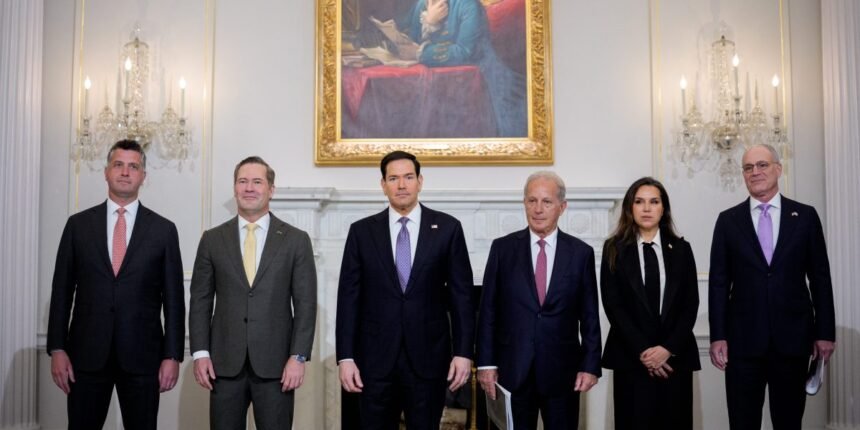
For the first time in history, the Lebanese ambassador to the United States, Nada Moawad, and Israel’s ambassador to the United States, Yechiel Leiter, sat in the same room at the State Department in Washington, D.C., facing one another as two states ostensibly on equal ground, with Secretary of State Marco Rubio and other officials presiding over the talks. Lebanese and Israeli officials had been in the same room before, having held indirect negotiations in 2022 and direct talks last in 1993, but this was the first time that Israel and Lebanon’s flags were hung next to one another — a high-level public meeting of a kind never before attempted.
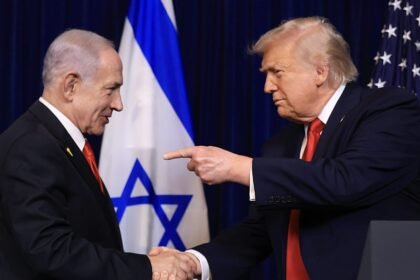
A 10-day ceasefire inside Lebanon was finally implemented on Friday, one previously agreed to during the Iran ceasefire talks in Pakistan and then almost instantaneously undermined by Israel. The United States, and the Israeli state to a certain extent, have portrayed this ceasefire as the result of this breakthrough, a direct negotiation with an enemy nation that, as Netanyahu said on Thursday, could lead to the “opportunity to forge a historic peace agreement” with Lebanon.
Many Lebanese have been able to return to their home villages under the ceasefire, but this was also the case in 2024, which then was followed by the implementation of an Israeli military buffer zone that left much of the south even more in ruins than from the war itself. The danger of these negotiations lies not in the immediate short term, as the residents of Beirut’s southern suburbs and the south experience a reprieve from intensive bombardment, but in the long term, beyond the 10 days.
Israel has now reaped the fruits of unilaterally declaring Lebanon outside of the Iranian ceasefire, against its previous agreements, and has now made permanently ending the war, as Iran has desired, a much more difficult prospect. Such a long-term cessation is now reliant on the ability of the Lebanese government to do what America and Israel demands, dismantling Hezbollah by any means necessary even if it means speeding headfirst into a civil war.
While Lebanese President Joseph Aoun hailed the ceasefire as evidence Lebanon is “no longer a card in anyone’s pocket,” Hezbollah members of Parliament, as well as Iranian officials, have told a different story. Even if Hezbollah “will cautiously adhere to the ceasefire,” the deal did not come about from these talks but instead from Iranian pressure to reach a ceasefire as a precondition to another round of negotiations between Tehran and Washington, now set for Monday, albeit looking increasingly fraught. Iranian parliamentary speaker Mohammad Bagher Ghalibaf announced after the ceasefire that it was the result of the “resistance and steadfast struggle of the great Hezbollah and the unity of the Axis of Resistance.” Hezbollah MP Ibrahim Moussawi was more blunt, telling Drop Site News that this was the “same ceasefire agreement” reached in Islamabad days ago, only now stamped with Israel’s belated co-sign.
While Hezbollah had significant leverage to force a ceasefire on its behalf — with Iran’s threats to return to war with missiles already reportedly on the launchpad if Lebanon was not included in the deal — it is unclear what leverage the Lebanese government had to negotiate a ceasefire on its own. Throughout the previous ceasefire and into this war, Israel argued Lebanon’s government was incapable of disarming Hezbollah, with Israeli government-aligned newspapers deriding the state’s inability to even expel the Iranian ambassador after Lebanon’s foreign minister ordered him out in March. Israel’s Foreign Ministry routinely criticized the Lebanese government for being “all talk and no action” on disarming Hezbollah, and Israel’s Defense Minister Israel Katz threatened that the Lebanese state itself would pay a “very heavy price” by way of Israel destroying “Lebanese national infrastructure” and the “loss of territory” to Israeli occupation.
After Israel’s military launched “Operation Eternal Darkness” on April 8, killing more than 300 Lebanese civilians and bringing war to places in Beirut that had not been attacked since the 1980s, Lebanon’s Prime Minister Nawaf Salam came out and insisted that “no one but the Lebanese state can negotiate on behalf of Lebanon.” Aoun further said Lebanon could not accept negotiations on its behalf by anyone else, and that this was a “sovereign matter” above all else, even amid ongoing Iranian military pressure to bring Lebanon into the ceasefire. Israel, whose diplomats refused to speak with the Lebanese government in early March on the basis that Lebanon was not “credible,” and whose U.N. ambassador said “dialogue with the Lebanese government cannot stop the fire from Lebanese territory,” suddenly decided to focus all its efforts on arranging unprecedented negotiations.
Lebanon’s ambassador claimed after talks concluded that she had raised the ceasefire with the other representatives (Axios confirmed the prospect was brought up “informally”), but neither the Israeli nor the American officials stated the talks were to achieve a ceasefire. The prospect was in fact “peace,” a long-term settlement between the two nations, or as Leiter, Israel’s ambassador, put it, to affirm “we are on the same side, we and the Lebanese” and that Lebanon would “no longer be occupied by Hezbollah.”
Leiter has made the issue of peace with Lebanon one of his top priorities since being appointed in early 2025, saying in an interview with PragerU last May that he was “upbeat” about Lebanon, as well as Syria, potentially joining the Abraham Accords, perhaps even before Saudi Arabia. He also told reporters this week that he had spoken with Lebanese officials about a future in which one could cross the border in a “swimsuit to vacation on the beaches of both countries.” Beyond these liberal platitudes, Leiter himself has had a significant past — one deeply intertwined with Israeli expansionist politics that he now strenuously denies applies to Lebanon.
Amid all of this outpouring of peace, those supposedly advocating for it are in the same government as those advocating Lebanon’s destruction.
The first West Bank settler to be selected as ambassador to the United States, Leiter was an early member of the Jewish Defense League, an organization the FBI later described as a right-wing terrorist group and led by Rabbi Meir Kahane, whose members committed mass shootings of Palestinians, plotted to bomb American mosques, and attempted assassinations of U.S. politicians. Leiter was then a member of Kach, Kahane’s political party, which was later banned as a terrorist organization inside Israel itself. During this period, Kahane advocated for a wide-scale deportation of Arabs from Israeli-occupied areas as well as from Israel itself, and labeled southern Lebanon as part of Israel’s “minimal” borders. Leiter left the party in the 1980s, claiming Kahanism came from “a weakness of character,” but made these criticisms in his capacity as a leader of the Hebron settlement movement in the occupied West Bank, attempting to paint those who advocated peace with the Palestinians as just as misguided.
As ambassador to the United States, Leiter told the Lebanese news outlet This is Beirut in late 2025 that Israel and Lebanon “have a history,” recalled the disastrous economic conditions in Israeli-occupation southern Lebanon with a smile, and said southern Lebanese used to line up in early in the morning at the border every day to seek economic opportunities in northern Israel. “We’d be more than happy to see that again,” Leiter said.
While the Israeli government has constantly demanded the Lebanese Army do more to disarm Hezbollah and impose Lebanese sovereignty over the country’s south, Leiter has made no indications that Israel would accept any military build-up, even by Lebanon, at the border with Israel, saying in a visit to occupied Syrian territory last November alongside Netanyahu and Katz that Israel could no longer tolerate “foreign armies” on its border. Leiter has also warned certain other Lebanese allies, such as France, should stay “far away” from these negotiations, and said, “they are not a positive influence, particularly not in Lebanon.” France had previously advocated for direct talks between the Lebanese government and Israel but had also condemned Operation Eternal Darkness and called for the Iranian ceasefire to apply to Lebanon as well.
While the Israeli negotiating team has been explicit that the talks were intended to get the Lebanese government to ally with their country against Hezbollah, there was another goal at work, one not reflected by the photo ops: to legitimize the indefinite occupation and depopulation of southern Lebanon.
In an interview on Israeli TV about Israel engaging in negotiations with Lebanon, Finance Minister Bezalel Smotrich asserted that “no one will disarm Hezbollah for us” and said a peace agreement between the two countries would serve to “greatly legitimize” Israel’s position. He also said he would push for the Israel Defense Forces to remain up until the Litani River, which Smotrich last month described as the location where Israel’s “new border” must be.
Netanyahu has since affirmed the existence of a “Yellow Line” in Lebanon post-ceasefire, and in the ceasefire text, there is also no mention of any withdrawal for Israeli troops — only that the ceasefire’s extension relies on “Lebanon effectively demonstrat[ing] its ability to assert its sovereignty.” Israel, for its part, “shall preserve its right to take all necessary measures in self-defense, at any time, against planned, imminent, or ongoing attacks” and that such actions would not violate the agreement.
The groundwork is being rapidly laid for further and further demands on the Lebanese state — more disagreements, more violations — and potentially binding the future of the Lebanese state with an Israeli one that seeks to impose the depopulation of wide swathes of its territory, and considers its Shia population as its enemy. In response to criticism that he was being deceived by the Lebanese government, Smotrich replied that amid peace negotiations, Israel was still acting to annihilate towns and cities where tens of thousands lived: “We are erasing Khiam, and we are erasing Bint Jbeil.” Amid all of this outpouring of peace, those supposedly advocating for it are in the same government as those advocating Lebanon’s destruction.